| Category | Strongholds |
| Continent | Karterus |
| Region | Azrik |
| Owner | Ba'lith |
| Built | 12 Bloom 951 |
| Map | Vetoubahr |
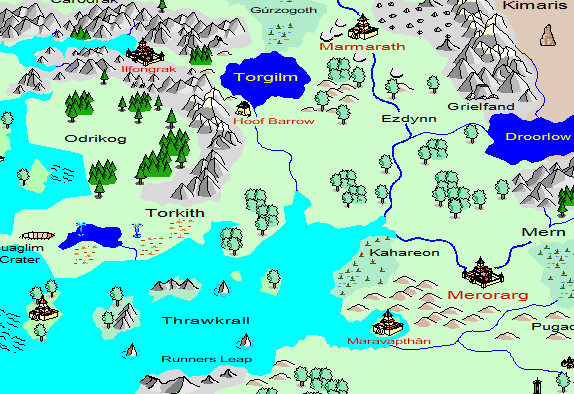
When the city of Merorarg fell in 816, the northern minotaurs of Azrik recognized their time for war had arrived. The expansionist empire of Ba'lith, harboring ambitions of a unified minotaur nation, pressed against the borders of the then city-state of Ilfongrak. The minotaurs of the north, centered in Ilfongrak, battled for control of the coastal road between Lake Torgilm and the Carodrak foothills.
At the foundations of what is now known as Hoof Barrow, the remains of many fallen warriors from past battles were laid to rest. They were either cremated in funeral pyres or interred within the barrows. Legends emerged of warrior spirits and ghostly apparitions, and a belief that these wandering souls were revered by the courageous spirit of the living. This supernatural thinking, born of imagination and witchcraft, was exploited for its strategic value. The planners of Ilfongrak constructed a fortified bastion over the barrow, purportedly to protect the "wandering spirits." Rather than bypass the seemingly impregnable Hoof Barrow from the south, driven by spiritual beliefs, Ba'lith wasted numerous soldiers and resources besieging a place that never fell, further reinforcing the legend of the site's ghostly heroes from bygone eras.
Another legend of Hoof Barrow stemmed from a unit besieged for an extended period. Defenders exhumed the deceased, utilizing ground-down hooves in the production of mortar. Furthering the mystique of Hoof Barrow, it is claimed this mortar rendered the walls impervious to siege; for the minotaurs of Azrik, sanctity of the dead applies solely to the horns and arms. Today, it is a common practice across the Ba'lith Empire to honor fallen minotaur warriors by committing their hooves to the construction of walls and towers.