| Category | Empires | ||||||
| World | Bal-Kriav | ||||||
| Region | Clans | ||||||
| Government | Kingdom | ||||||
| Capital | Numakkhalgu | ||||||
| Population | |||||||
| Races |
|
||||||
| Alignment | lawful good | ||||||
| Deities | Naraz-Nâru, Kebechet | ||||||
| Enemies | Andigimok, Bru'khar, Dilkuglapgon | ||||||
| Established | 27 Saunas 642 | ||||||
| Map | Narbuzad |
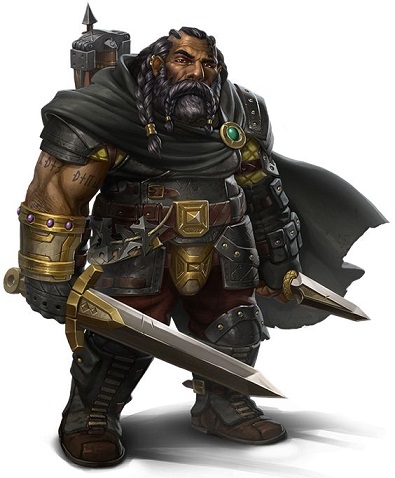
In the Year 612, the Burazdan clan and several others parted ways with the Kingdom of Phlehorn (92 - 1080). The driving factor for these former Phlehorns was an unbreakable treaty between the crown and Khizunul's stone giants. As honor and one's word were paramount to its people, Phlehorn could not honorably breach the agreement, though its non-citizens could. Once outside Phlehorn's borders, the ex-Phlehorns founded the settlement of Numakkhalgu. Long denied the "splendors of Naraz-Nâru," namely gold ore and gemstones, they turned their efforts to excavating the Khizunul.
Often Hjalmarbrodd's territory, which is abundant in mines and mineral wealth, is considered an equal partner to Khizunul's stone giants.
In 1082, Gunbil, the former city of Phlehorn, was peacefully incorporated into the holdings of the Hjalmarbrodd Monarchy.