| Category | Strongholds |
| Continent | Brucrumus |
| Region | Clans |
| Owner | Hjalmarbrodd |
| Built | 14 Bloom 51 GE |
| Map | Narbuzad |
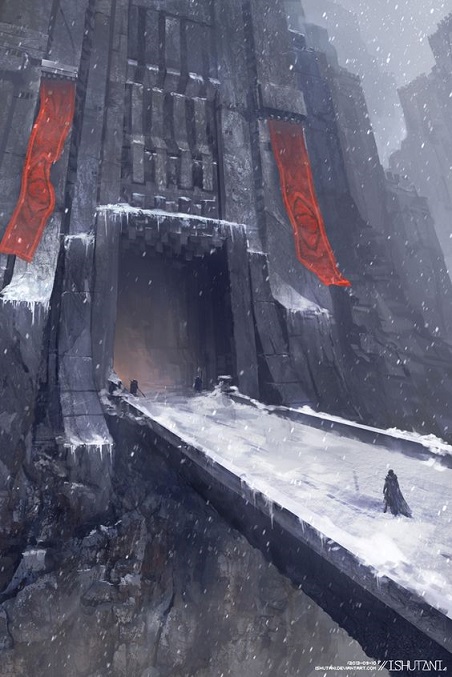
Forgeheim was constructed during the God Era by elements of the Granite Helm Army under General Nûl. Comprising stone giants and Turkûn under the overall command of Naraz-Nâru, a unit of the Quara'tun Covenant constructed this mountain bastion across one of the wider and smoother passes cutting north to south through Khizunul. When the Demon Spawn War concluded, several dozen giants remained as wards of this nearly impregnable place, which had withstood wave after wave of demons hurling themselves against its grayish black walls. These walls are heavily warded and lined with seams of lead and other materials to prevent bypassing them through passwall spells, etherealness, or destructive means against earth and stone.
The piles of demon corpses were so numerous that they formed ramps leading to our bow slits. Despite the withering fire, the sheer mass of demons sometimes managed to break through. Bloody melee would then ensue for hours within Forgeheim, with the floor becoming so slick and packed with the deceased that one had to crawl across them to engage the enemy.
Galân, of the Granite Helm Army - "The 9th Siege"
In the Lith-Crillion Era, the location was assailed by eldritch giant marauders serving Saer Erkjorg. This group originating from Dafrlami, advanced up the Nulag river and then overland, seeking relics of the Demon Spawn War. They utilized magic to gain entry and then charming and confusion spells to wreak havoc on the stone giant defenders. The eldritch giants were ultimately defeated in the crypts when, rather than see the place defiled, stone giant shamans raised the dead. This undead force of skeletons was so vast that it accomplished what the demons had done when attacking Foreheim - overwhelming the enemy through sheer numbers. It is said that Naraz-Nâru took offense to the raising of ancient heroes to fight as undead, desecrating the crypts. Consequently, his shamans soon lost all priestly contact with them. In 1677 LE, the stone giants abandoned Foreheim to its skeleton sentinels.
In 214, Forgeheim was seized by a Turkûn mercenary force out of Phlehorn. They were captivated by the settlement's architecture, its forgotten temple to Naraz-Nâru, and the thousands of ancient suits of armor and weapons, prompting them to establish it as their new home. They restored the place and even confronted stone giants who had long forgotten its history. When Hjalmarbrodd rose to power, it was revealed that the Burazdan had hired the mercenaries to enter Khizunul and eliminate several goblin enclaves. The mercenaries were also tasked with prospecting for mines in an area that was, at the time, licensed to another Phlehorn clan.
Under Hjalmarbrodd, the location was connected to four nearby rock pinnacles via the Arakgandal bridges. These bridges led to two iron, one blutium, and several gemstone mines, all situated high up and inaccessible from the ground. The fortress's strategic position across a vital trade route, as well as its abundant mines, made it a heavily guarded stronghold. Forgeheim boasted a formidable garrison of stone giants and Turkûn, supplemented by an auxiliary force consisting of giant mountain goats, giant eagles, griffons, and a gold dragon. This gold dragon, usually young to adult in age, served a twenty-year tenure. In addition to aiding in the defense of the site, these gold dragons commenced their divine calling, becoming priests of Naraz-Nâru.