| Category | Events |
| Location | random world |
| Period | random |
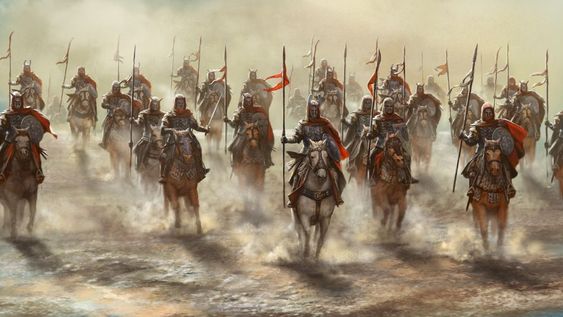
The seemingly endless conflicts on Avalas and other worlds of the Acheron system are the consequence of the Avalas War Call. This phenomenon summons combatants from distant realms. They arrive in small contingents and even massive armies, transported across the Void to Avalas, the battlefield world of Acheron. On this alien landscape, they find their weapons and armor vanished, exposed to the elements and roaming hostiles. Amidst the battle-scarred terrain, new war implements are readily available. The armies drawn by the Avalas War Call remain only temporarily, with some fortunate to be stranded for mere weeks or months, while others linger for years or choose to settle permanently. It is oft remarked that those who eagerly pursue conflict stand the best chance of returning from whence they came.
Early in the Lith-Crillion, one learned of the potential of the Avalas War Call, utilizing those that came through to disseminate his influence across the Mortal Systems. The first to employ this tactic was the demon lord Orcus. He coveted what the Higher Powers possessed - greater might and renown, and most importantly, to be venerated for his grandeur. On Avalas, shrines and other places of worship served as training grounds for his proselytizers. When Orcus's success became known, others sought to insert their own proselytizers into visiting armies. The ultimate objective was to propagate the creed of their patron across the Mortal Systems, the source of divine power necessary to ascend to the rank of a Higher Power.
The probability of one's unit or army being summoned to Avalas is minimal. The Avalas War Call requires a battle commencing at a random time each day. Furthermore, this occurs on a random world. The vastness of Nawirrûs, the universe of worlds and stars outside of Chaos, is such that alien units and armies are perpetually appearing and disappearing somewhere on Avalas. Some may opt to wait it out. However, they soon discover that their neutrality towards Avalas' affairs, or inaction and avoidance of conflict, only extends their stay. Some forge their own path, remaining on Avalas to establish their own empire, while others find themselves embroiled in the world's religious wars between those answering to Higher Powers or those aspiring to divinity.
In the Lith-Crillion Era, the Avalas War Call was manipulated, with its random element of time becoming fixed. This was done to grant a particular army a better chance of reaching Avalas. They merely had to initiate a battle at a specific time and rely on chance for the Avalas War Call to attune to their world. In 272 LE, Maglubiyet, the future deity of the goblins, leading an army of nearly twenty thousand, found itself summoned from the realm of Kriav. The time alteration was achieved through a deal between Graz'zt and Chronos. In exchange for the Master of Time's assistance, Graz'zt surrendered his prized harem of succubi. In turn, Chronos transformed the Avalas War Call from a random time and world to one of merely random world. Maglubiyet only needed to commence a battle at a set time and wait for chance to align with their purpose. It required fifteen battles and two years before the opportune moment arrived.
The battle was fiercely contested, yet we emerged victorious. The skies crackled with electrical discharges as a thick mist rose from the gore-stained terrain. The cacophony of combat reverberated from the distance. Maglubiyet commanded his legions to advance, penetrating the war-ravaged domains of Avalas.
Marz Bulfish, the 18th Chronicler to Maglubiyet, from the work "Into Battlefields Eternal"
Once Maglubiyet arrived on Avalas, Chronos relinquished his control over the Avalas War Call. These actions did not go unnoticed. Chronos received a stern warning from the Hall of Edicts, informing him that his prospects of ascending to the status of a Higher Power would be jeopardized if he persisted in interfering with temporal aspects that could impact so many.