| Category | Marvels |
| Continent | Brucrumus |
| Region | Clans, Unaraggumak |
| Owner | Phorngoad Rail |
| Built | 1587 - present |
For practical applications, the utilization of steam to power engines materialized in 1555. On Angvild, a remote and alien island, Engineen tinkerers created steam pumps, draining seawaters gradually eroding the island's underside. Angvild, not indigenous to the surrounding environment, was once again undergoing fracturing. Substantial resources were invested in finding a method to stabilize the island and keep the waters at bay. This was where the steam pumps proved invaluable. As a result of the potential wealth and influence, Engineen 's government expanded, growing increasingly bureaucratic, with competing factions. Civil engineering groups expressed interest in stabilizing the island through magical means and structural supports to bolster weak areas. Engineen's Department of Mechanical Engineering, conversely, sought to extract the water using mechanical devices. Another faction, the Department of Flight, turned their gaze to the horizon, aspiring to construct airborne vessels to evacuate the island for more stable landmasses.
In 1584, a Class 2 Engineen Exploration Airship landed in the territory of the Fargimdal. Recognizing the potential for mutual technological advancement, the two sides swiftly formed a close friendship. Despite being separated by over six thousand miles, with skyships being rather primitive for the era, direct trade of goods proved impractical. However, the exchange of knowledge and advisors was facilitated through the use of teleportation magic. Towards the conclusion of the year, the Engineen shared their expertise in steam technology in return for the Fargimdal 's knowledge of concrete production.
In 1587, Phorngoad Rail, a modest enterprise at the time, embarked on an ambitious project known as Kibar-Kûn. The Harworb Line, the inaugural segment of this expansive railroad undertaking, was envisioned to connect the dwarven cities of the region. Construction commenced at the rail junction city of Bolnalmak.
The construction of the Tarbhunarâg Line, intended to connect Bolnalmak with Tarbhunarâg, was marred by a war over the exploitation of the Gwaellurth forest. One of Phorngoad Rail's subsidiary companies instigated the conflict with Fargimdal's northern neighbors, the Rúmil. The Third Gwaellurth War (1670 - 1685) concluded when one of its heroes ascended to divinity, her transformation into a Higher Power bestowing a sacred blessing upon the surrounding forest.
Movement on the railways is rather sluggish. Brigands, monsters, avalanches, and other hazards pose a constant menace. Sections of track have speeds dictated by regulations. Insurance premiums fluctuate depending on an area's anticipated risk of peril.
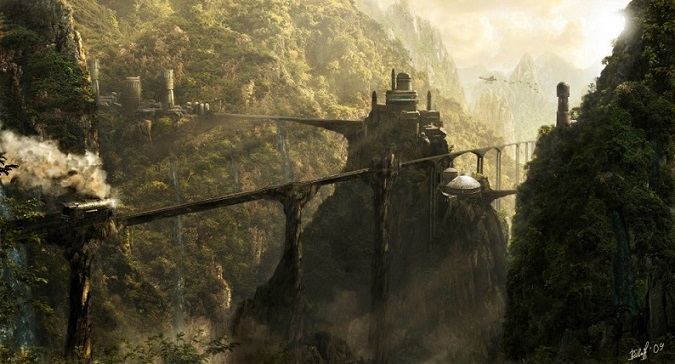
The region's dwarven cities are now interconnected by an expansive rail network. These lines link all major settlements, with colossal trusses spanning deep ravines, traversing marshes, and winding through mountain ranges. Collectively known as the Kibar-Kûn, this marvel of engineering and industry is constructed with unwavering precision, its builders sparing no expense in ensuring its safeguarding and efficiency. Numerous armored locomotives patrol the rail lines, vigilantly checking for saboteurs or destructive creatures. However, the railroads and their polluting engines have long been a source of contention and military targets for the elven empires of the High Wood Country.
| Railroad | Endpoints | Built |
|---|---|---|
| Harworb Line | Bolnalmak, Harworb | 1587 - 1592 |
| Kizan Line | Bolnalmak, Dabul-Gind, Rumaktharga | 1591 -1621 |
| Tarbhunarâg Line | Bolnalmak, Tarbhunarâg | 1668 - 1686 |