| Category | Highlands | ||
| Continent | Brucrumus | ||
| Region | Northern Hordelands, Phangul | ||
| Maps |
|
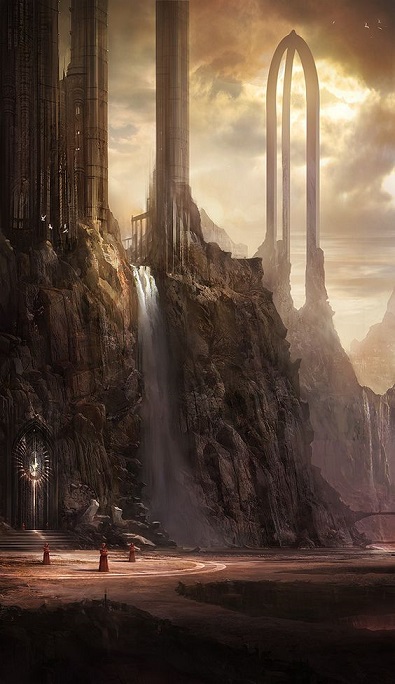
Achamâz is an imposing plateau that rises over four thousand feet above the surrounding terrain. Its exterior is composed of a gleaming white stone shell, approximately 50 feet thick, which encases a substantial core formed of the Tears of Achamâz. Though a towering presence on the surface, Achamâz's reach extends deep underground, with its western extremities bordering the Heliotrope Sea.
Achamâz is a place of sacred power, ancient relics, and structures built long ago. The region features ancient shrines and open temples with an architectural style more akin to those found on the worlds of Nawenglorûs than on Bal-Kriav. The plateau is the domain of coutls, Makarrûs, sphinxes, a few golden dragons, and other benevolent creatures. Legends also speak of protective angels within the plateau. These angels, alongside other powerful guardians, watch over sacred areas like Igorruš and Ukhišai. Both are massive, vault-like fortresses built into the heart of Achamâz. Their contents remain a mystery, as no group has ever mustered enough strength to penetrate their cores. Those few raiders who have escaped report encountering defenders emerging from cleared areas, suggesting the presence of entities from beyond this realm.
Achamâz is revered as hallowed ground by numerous virtuous faiths. At its foundation lie shrines dedicated to every righteous deity, serving as pilgrimage sites, each overseen by a small fortification or castle consecrated to a benevolent god such as Athena, Bahamut, and Danzar-Khâl.
The inhabitants of Achamâz regard all as unwelcome intruders. They will escort lawful-aligned guests for a single day. Thereafter, these visitors must depart Achamâz and refrain from returning for a year. Visitors of differing moral inclinations are warned, then assaulted if they linger.
The elevated plateau of Achamâz also contains rune stones inscribed in the ancient Valarin language. They serve as historical documents chronicling the God Era, recorded from the viewpoint of the Covenant.
Related Information
Notable Areas
- Igorruš
- Ithilmar
- Pass of Rungalur
- Phoyarrâr
- Reconstruction
- Stream of Immortality
- Ukhišai
Notable Resources
- Aurorum
- Tears of Achamâz