| Category | Ruins |
| Continent | Brucrumus |
| Region | Ice Cap |
| Founded | 26 Artifice 96 GE |
| Map | Aettein |
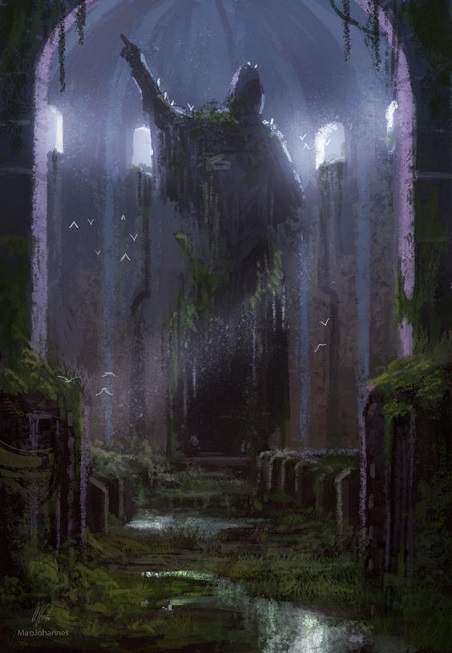
Near the heart of Cinyossion, the area of Aphelzâk began as a crystal grotto with deep water streams cutting a path eastward to join the Eldorien River. During the Creation War (1486 DE - 8777 DE), the region became a place of revelry and debauchery, with the annual Satyr Festival lasting several weeks. A problematic area, with drunkards and some relinquishing responsibilities for a carefree existence, the Covenant restricted access to those needing a morale boost or breaking charm spells; for the latter, the area's faerie dust is renowned for dispelling even the most potent charm enchantments.
In the Demon Spawn War (89 GE - 269 GE), the fey of Cinyossion allied with the Covenant. By order of Silvanus, the fortified and built-up Aphelzâk was required to blend harmoniously with nature. The result was a camouflaged citadel with hundreds of secret entrances, dangerous plant-life, and countless hiding places. Constructed on the surface, in the trees, and underground, Aphelzâk proved impenetrable to Baphomet's renowned Ten-Thousand Knucklers and other assailants.
After the Demon Spawn War, Aphelzâk once more became a site of celebration, carrying on the yearly Satyrfest.
In the Lava Flood War (110 HE - 125 HE), the people of Volgad re-established themselves in the ruins of Aphelzâk. In 125 HE, Aphelzâk became Volgad's new capital. The Volgads ruled from this city for a little more than four hundred years. During this time, they endured constant harassment from the Gadstill Dynasty and their old Borngring enemies, now united under the banner of the Hofthorm Monarchy. Beset by foes to the north and south, Volgad's culture and economy shifted from one of arts and enlightenment to a focus on warfare. Instead of writing, song, and art, they beat the drums of war. This led to a steady increase in the number of military orders for both the martial arts and those utilizing magic. Temples trained battle priests, and institutes trained arcane practitioners to become battle mages. It also gave rise to one of the finest bardic colleges in the land - the Zenal-Tarush.
The ballads recounting acts of heroism and tales of the defenders of Imrik, particularly those extolling the exploits of the Šukhan Legion, as well as the martial music performed by the Yônêrik military band during the sieges, were at times the sole forces that appeared to sustain the morale of Aphelzâk and prevent the collapse of her fortifications.
Migar Yônêrik, from the Nithian History, Volume II - "Songs of Zenal-Tarush"
In 527 HE, Aphelzâk was seized by the Gadstill Dynasty. The fall of Aphelzâk marked the conclusion of the Volgads' sovereignty. Most of Volgad's populace had already departed when the city was stormed, evacuated by Zenduram's arch-mages. Those who accompanied Zenduram settled far to the north in the lands of Magrâbik. In this northern region, approximately 18,000 Nithians commenced the rebuilding process under the newly established nation of Tamlêrran.
After the fall of Gadstill, Aphelzâk was reduced to a state of ruin, yet each subsequent year has seen it become a safe haven for the month-long revelry of the Satyrfest - a time of music, libations, merriment, and indulgence.