| Category | Cities |
| Continent | Brucrumus |
| Region | Cinazan |
| Owner | Khazarkar Empire |
| Population | 450,000+ |
| Founded | 9 War March 1024 |
| Map | Skegjold |
In 1027, following the implementation of a theocratic system of governance, the Khazarkar Empire relocated their seat of power from Bandunazân to Nibar-Pharân.
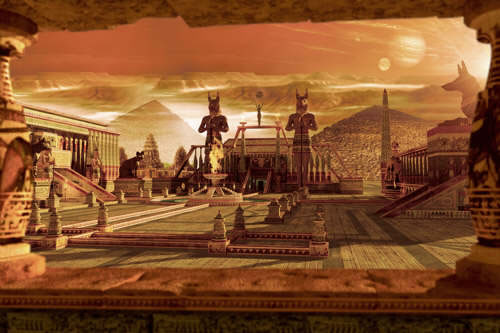
The grand metropolis of Nibar-Pharân serves as the capital of the Khazarkar Empire. The city is situated atop a colossal plateau known as Khirrêth. From the towering spires of the city, one can gaze northeast into the perpetual haze of Pharminul or beyond this fog bank to the majestic peaks of Ice Cap. In terms of population size, Nibar-Pharân is the third-largest city on Brucrumus, surpassed only by Paradomea City and Collossapolos. The grandeur and affluence of this grand metropolis overshadow every other city on Bal-Kriav. Nibar-Pharân teems with activity, religious fervor, and political intrigue.
The city's landscape is dominated by grand pyramids. Ten of these are the Pyramid of the Setarchs. Nine of these pyramids contain the mummified remains of former Setarchs of the Khazarkar Empire. The final one is reserved for the current Setarch upon his demise. The oldest of the Pyramids of the Setarchs, the Pyramid of Abattâdas, serves as both an imperial palace and tomb for Setarch Bazar Abattâdas. Only a single enemy has ever reached the steps of this eight-century-old structure. In 1115, the Jara Khan Bone Pounder and his Bloodletters assaulted the city while it was still under construction, nearly killing the reigning Setarch, Ginal Benâth.
In addition to the city's majestic pyramids are numerous smaller ones for esteemed priests who have faithfully served the empire, alongside hundreds of statues, thousands of ornate columns, and other sumptuously constructed government and ecclesiastical structures. Many of these are lofty sanctuaries, boasting soaring domes, vaulted ceilings, and stained glass windows. Visitors from abroad are often left in awe at the stunning architecture, opulent residences, and ostentatious display of the empire's prosperity.
The most prominent statues of the city are those of the empire's primary deity, Set. All other gods are prohibited from being worshipped in public. The palace boulevard leading to the Pyramid of Abattâdas is flanked by hundreds of ornate statues depicting former religious leaders and heroes of the empire. These statues range from 10 to 20 feet in height, with the varying heights symbolizing their significance within Khazarkar society.
Water is supplied to the city from deep wells and immense aqueducts. The aqueducts extend for five miles from Izgarrêth to the city. These structures also function as bridges for those employed in the Izgarrêth mines.
One of the most cherished relics of the Khazarkar people lies concealed within an impenetrable vault deep in Nibar-Pharân. This crystal artifact is the Agêrdul, an item that houses the functioning brain of a Lith-Crillion.
Ermikel the Balance - "The Agêrdul Relic"
Related Information
Notable Areas
- Baying Cells
- Kamrazîr
- Mirandibêth, pyramid with offices of the Pharzîmrâth
- Mullûwâr
- Pyramid of Abattâdas (palace, Agêrdul )
- Pyramid of Avalninâth
- Pyramid of Hama-Ulmar
- Pyramids of the Setarchs
- Târush-Ginâth
- Târun