| Category | Lexicon |
| Type | regional lore - Hive |
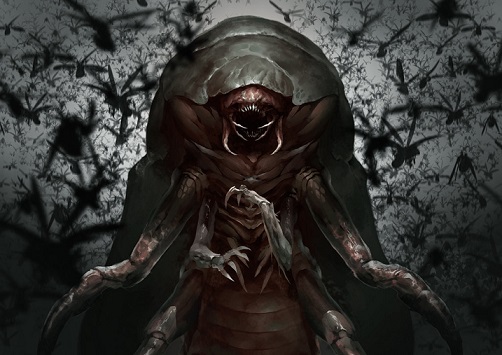
A Hive Swarm consists of non-intelligent and occasionally intelligent insects originating from the Hive region. These swarms are predatory and exceedingly perilous. Even the non-intelligent members possess an elevated level of intelligence, a consequence of Auhtai experiments aimed at advancing non-sentient insects. The Auhtai have become adept at comprehending the inner workings of diverse insect species. They have also uncovered methods of replicating the swarms' toxins and utilizing their components to fabricate sonic energy devices.
The researchers obtained most of their specimens from the desolate desert wastes of Rônnahar. Given the inhospitable nature of this desert, they found that the creatures in this area were more docile and easier to capture, in stark contrast to those found elsewhere. At the research centers in Cha-ka and Tal'tich, the Auhtai learned to craft powerful elixirs from their specimens. From a large insect known as a knell beetle, they discovered how to replicate its rattling sound even after the creature's demise. This led to the development of simple tubes and devices capable of producing sound. After a decade of research, they had perfected the use of sound energy for construction, demolition, and mining operations, which they termed Päiki-Synhö.
The Auhtai's greatest breakthrough was their discovery of how to marshal large numbers of insects into a swarm. The first so-called hive swarm was composed of flying desert beetles. The early Auhtai-made swarms were small and short-lived, with the survivors used to rebuild the next colony. This was the case for a particular batch of insects known as Lot 396. This colony went through numerous generations and was subjected to experiments involving alchemy and psychic energy, with a researcher trained as a mentalist sharing their psionic potential to enlighten the swarm's collective psyche. In the early morning hours of 12 Bloom 1512 HE, Lot 396 gained a higher awareness.
In the bio-spheres of Alcha-pok, we never allow the swarms to reach a critical point. We cull the insects with fire and smoke to maintain manageability. We apprehend that if the swarms split after reaching a critical mass, it would result in two colonies that would engage in a fierce struggle for control over the confined spaces.
We lost one lot, this was Lot 396. Rangers were dispatched to locate and eliminate the batch. Regrettably, only one ranger returned from this expedition, the others having been slain after witnessing Lot 396 dividing. The survivor recounted that the two swarms did not engage in mutual combat, but rather employed crafty, pack-like strategies to pursue and eliminate his fellow rangers.
excerpt from an Auhtai journal
The available records suggest that Lot 396 attained critical mass a month later. It is now believed that the hundred swarms which assailed and depopulated Cha-ka descended from Lot 396.
Hive swarms are occasionally accompanied by colossal insects. The swarms exhibit an intellect that is atypical for their species. Although some are still regarded as unintelligent, they possess sufficient cognitive capacity to engage in actions that may be unanticipated for an insect.
Hive swarms typically endure for periods ranging from weeks to several months, with rare instances of them persisting for years. Upon the dissolution of a swarm, the individuals disperse across a vast expanse. The rationale behind their breaking up and reforming can be attributed to the recognition that food resources are not always abundant. They appear to comprehend that a swarm's collective power enables them to subdue much larger prey, thus providing sustenance for the many and nurturing the next generation.
In the Locust Encroachment (1412 - 1694), Hive Swarms posed a grave threat to the survival of the Ba'lith Empire. The empire relinquished substantial territory to the swarms, from the northernmost reaches of Yandôr into the southern tracts of Vetoubahr. The defenses that emerged from this conflict were the formidable walls of Moralk and its devastating Sonic Horns.
In 1698, a Hive Swarm unlike any other demolished a Sonic Horn and then carved a path across Azrik. This swarm was a ruin swarm - a massive, devastating cloud that left a zig-zag trail of destruction from Bithiemeth to the walls of Merorarg. The ruin swarm was finally vanquished when Emperor Raxcvillibus emerged from the city and slew the menace.