| Category | Tribes |
| Region | Ma'Ohari |
| Race | Elderaunt |
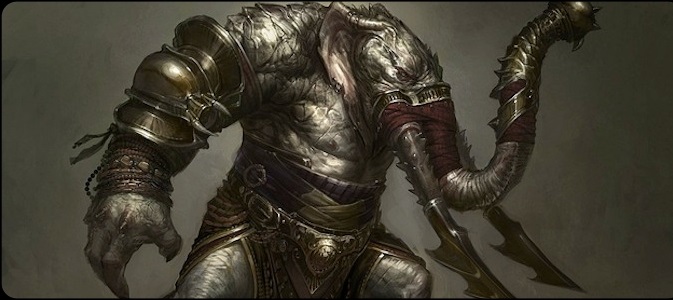
The Irastâ tribe rose to prominence towards the end of the Horgon Era. They traversed the expansive Shathirmun plains, maintaining a closer connection to the wilderness than any other Elderaunt tribe. Some claim the Terraces of Mêzelurûs, named for the deity that perished at Mizzen, contributed to their profound affinity with the natural world.
The Irastâ were the inaugural inhabitants of Irastânâz to utilize elephants as both mounts and workers. At the time, this was an unusual practice for the Elderaunts, who were predominantly renowned as maritime voyagers. Additionally, the Irastâ were the first Elderaunt tribe to embrace shamanic and druidic traditions, a development also credited to the Terraces of Mêzelurûs.
In the First Epoch, the rise of the elderaunt warlord Jurmalon and the ideals of Elephant Reverence emerged. In the origin myth of Elephant Reverence, the Irastâ sought to conceal the dishonorable origins of their race while elevating the figure of Jurmulon, who had hailed from their tribe, to mythical status. When Jurmulon founded Ivory Asylum in 921, many believed the myth that they had arisen from the ashes of Ilušur and Thunderous Walker. This falsehood has never been seriously challenged, as many prefer a glorious beginning over one under the oppression of Hydrocur lab coats.
For centuries, the Irastâ adhered to the ideals of Elephant Reverence, but then in the Second Epoch, seeing their tribe fall technologically behind and become impoverished while the coastal tribes grew wealthy, they took a new path. From 1012 to 1020, they looted the sacred tusks that littered Irastânâz. The ivory was shipped out of the country, becoming flooring in Zayr's palace, decorating the hero statues of Merorarg, and even adorning the hilts and pommels of pirate blades - all uses that most Elderaunts would customarily eschew. Ivory Asylum's highest court of law built a case against the Irastâ and they were punished. The entire tribe was exiled, sent to Anutoth to administer the newly founded settlement of Tâchumâz (established in the 18th Lunar month of 1020). For over a century, they managed this city. Their commercial rival was Salandirik. Those who controlled this rival city, both Ivory Asylum "colonial outposts," would ultimately be their undoing.
In 1125, the Irastâ lost their charter to Tâchumâz. This was the consequence of the ruinous financial state of the city they were entrusted to manage for the benefit of Ivory Asylum. Perceived as a potential threat to the incoming tribe set to govern the city, the Irastâ and their 5,000+ members were compelled to depart the city. They spent the subsequent five years resettling Yarrokhal, but then abruptly relocated.
In 1130, they traversed the Kimaris mountains, entering the desolate expanse of the Broken Lands. Seeking refuge from a magical tempest, they took shelter in the Thegildreon ruin. In this corrupted domain, they were tainted by abyssal energies, their very nature becoming fiendish. They forgot the Langurâpha language, replacing it with the grating tones of the Abyssal tongue. Irastâ's elderaunts were no longer the same race, physically and mentally transformed by the fell energies, henceforth known as the Maleraunts.
The Irastâ, a tribe of elderaunts, were warped and mutated by Thegildreon's baleful energies. They can no longer be considered true elderaunts, infused as they are with abyssal energies. Therefore, I suggest we designate this altered elderaut sub-race as the Maleraunts.
Gûm, seer of Loremasters of Ermikel - "Birth of the Maleraunts"