| Category | Empires | ||||||||||||
| World | Bal-Kriav | ||||||||||||
| Region | Karnegmoth | ||||||||||||
| Government | Council of Stone | ||||||||||||
| Capital | Tachylyte | ||||||||||||
| Population | |||||||||||||
| Races |
|
||||||||||||
| Alignments | chaotic neutral, neutral, chaotic evil | ||||||||||||
| Deities | Geb | ||||||||||||
| Enemies | Akthol-Tharag, Greenland Alliance | ||||||||||||
| Founder | Sal'rurg Thad | ||||||||||||
| Established | 21 Temporal 840 | ||||||||||||
| Map | Cinduk |
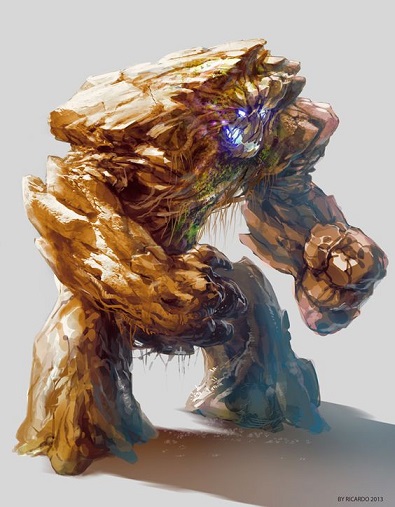
Beginning around 385, the Tinnanguth Empire found a means of enslaving the Earthen. Once arcanists had summoned them, amulets were put in place, transforming the conjurer's binding magic from one of minutes and hours to years. Thousands of Earthen were then employed in beautifying the empire, constructing grand structures, and mining the hills, mountains, and depths of the Underdark.
In the Dao Insurrection, earth elementals under dao warlords gained their freedom. After the Dao Insurrection, a fierce battle for control erupted among these warlords. This conflict, the Dao Civil War, spanned the period from 817 to 840, as self-proclaimed khans, hetmen, and atamen fought for absolute dominance. For 23 years, Earthen armies and their dao masters engaged in relentless combat across lands once owned by their Tinnanguth masters.
"The Castrated One," said to have relinquished his masculinity for the guidance of Geb, rose to power during the Dao Insurrection. His true identity was Sal'rurg, a magnetic leader with an army of colossal earth archons to enforce his command. Through military might and cunning, he united the Earthen who had once labored under Tinnanguth as one, establishing the Rilirthad Empire with himself as its inaugural Dao Khan.
The tyrannical ruler of this empire is Lherzolite-Tun IV. He maintains his dominance through the voices of twenty dao senators, the Council of Stone. These senators govern their respective principalities. The Rilirthad people are ruled by dao with titles of hetmen, atamen, and other lesser ranks, with the khan as the highest station. They share common traits: greed, superior intelligence compared to their brethren, and a lust for power. Intrigue is rampant in this chaotic empire. Consensus is rarely achieved in the senate. From the perspective of law-abiding nations like Malacost, the Council of Bile, or even the Orchish Empire, the Council of Stone is a mockery of lawful principles.
Over half of the empire's population are slaves, rendering unrest a significant internal and political issue. Nations like Malacost and Ivory Asylum, which oppose slavery, refrain from trade with the empire. Remarkably, slaves within Rilirthad are even permitted to own slaves themselves. Furthermore, a substantial portion of the empire's earth elementals are enslaved, with many originating from the Hejan Spires or the Togomud Sink.
Rilirthad derives its affluence from mining endeavors. The empire's miner genies, a specialized type of tasked genie, are perpetually occupied with excavating the hills, mountains, and the Underdark, seeking precious ores and gemstones to replenish the empire's treasury. The most lucrative mining region is situated around the Togomud Sink. It is here that ores and gemstones emerge into this world from the elemental ring world of Granitoid.
The Brownlands' expansion and the Karnegmoth Cataclysm are attributed to Rilirthad's actions. In response, the Greenland Alliance was established to counteract Rilirthad's terraforming endeavors. Regrettably, Rilirthad enjoys little support, with most prominent powers opposing the use of rifts to drastically alter the landscape.
In the Ivory Dao War, the empire's eastward advance was impeded. They captured the Gul valley, yet during this campaign, they forfeited the cities of Lamprophyre and Skarn.
In the year 1703, Rilirthad engaged in conflict with Akthol-Tharag during the Eradication War.
The principal objective of Rilirthad is to transform the region Karnegmoth into an expansion of the world Granitoid.
Architecture
The empire's towering cities are dotted with immense ziggurats. They are surrounded by expansive canals and conduits, channeling the earth, rock, and mud emerging from the Togomud Sink. They boast capacious meeting halls, dining areas, and council chambers that can accommodate thousands. Everything is constructed on a colossal scale, with the efficiency and expertise of the Earthen workforce rendering the additional effort negligible in cost. The governmental edifices are lavishly appointed, featuring paintings, mosaics, jewel-encrusted furnishings, adamantine statues, and treasures from afar, such as Shounejo porcelain and exotic furs from the frozen reaches of Ice Cap.
The streets of their cities are paved with an array of vibrantly hued marble. The lower streets serve as the domain of slaves and the lower echelons of society. Ascending from these streets are the more affluent dwellings of the middle class, accessible via broad staircases and intricately crafted bronze bridges. These elevated avenues, situated 30 feet above ground level, lead to the shops and residences of the wealthier populace. At the heart of a Rilirthad city stands a central ziggurat, the abode of a dao ruler. Encircling this imposing edifice are numerous smaller ziggurats, which function as the common areas of the settlement.
Related Information
| Tinnanguth | ||
| Rilirthad | ||
| Komatiite | ||
| Lamprophyre | ||
| Porphyry | ||
| Skarn | ||
| Tachylyte |