| Category | Oceans |
| Region | Cinazan |
| Climate | temperate |
| Maps | Nermanis Sea |
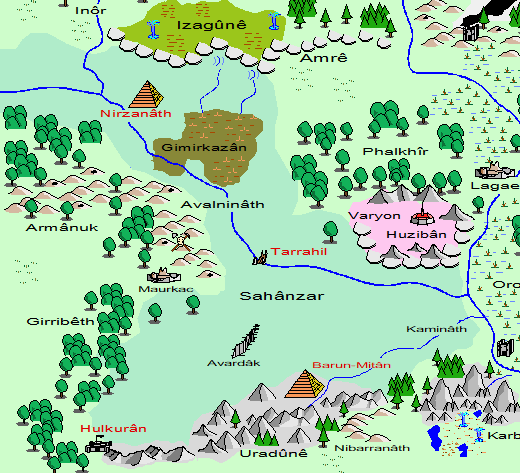
In the Horgon Era, the Nermais Sea served as a natural and seemingly impenetrable barrier between the fire giant lands to the north under the Hofthorm Monarchy and the frost giant lands on the southern side under Glangveif. When Hofthorm began constructing vessels at Silnir, they turned to raiding the gold-rich settlements of Glangveif. This escalated over time, leading to numerous wars between these two Titan Empires.
In the First Epoch, as the Titan Empires declined, the sea became the domain of numerous smaller peoples. The most prominent of these were three halfling city-states, collectively known as the Nermanis Syndicate.
In 920, the waters of this grand sea began to recede. A highly devout people, numerous Nermaneans believed they had committed a transgression, been abandoned by Avandra. The true cause proved to be the Mîmêk city-state Sigatharkin and their conflict with Runelderil. This was the Onyx Enmity War (915 - 920), when in the final year of the war, Sigatharkin engineers collapsed a portion of Zarag-Gûn. This opened a breach in the seabed of the Nermanis Sea.
The drow recounting of this cataclysmic catastrophe indicates that Sigatharkin's revered Mîmêk, with all their expertise, failed to comprehend the cavern ceiling was concurrently a seabed. The Mîmêk account suggests the engineers misjudged the charge and resilience of the bedrock.
When the demolition was carried out, a calamitous event unfolded. The sheer force of the inflowing water enlarged the breach, leading to the drowning of numerous individuals on both sides, with entire units vanishing without a trace. The devastation extended not only to the lands below the surface but also to those above. This catastrophe precipitated famine and drought, ultimately contributing to the downfall of the Nermanis Syndicate (712 - 923).
The Nermanis Sea had long maintained the surrounding arid region in equilibrium, with frequent rainfall and cool breezes. The loss of this sea to the depths below altered these conditions for centuries. Another entity affected by the draining was the Kuo-toa of Gholompotl. They witnessed their once submerged city, situated near the sea's bottom, become exposed to the "dryness and blistering rays of the stars", compelling them to abandon their settlement.
Beneath, in the subterranean region of Faelgor, the draining sea submerged Zarag-Gûn and parts of the Sigan-Kûn passage. The subterranean cities of Ilaleztice and Sigatharkin were submerged for many decades. Sigatharkin's survivors ventured north, establishing the settlement of Nurum-Maluk, while those from Ilaleztice joined other Runelderil holds.
Two centuries after the Nermanis flood, the climate of central Cinazan stabilized. The region had become more temperate and verdant in areas the sea had abandoned. The former seabed transformed into a fertile basin, now fulfilling the grain requirements of the Khazarkar Empire and beyond.